

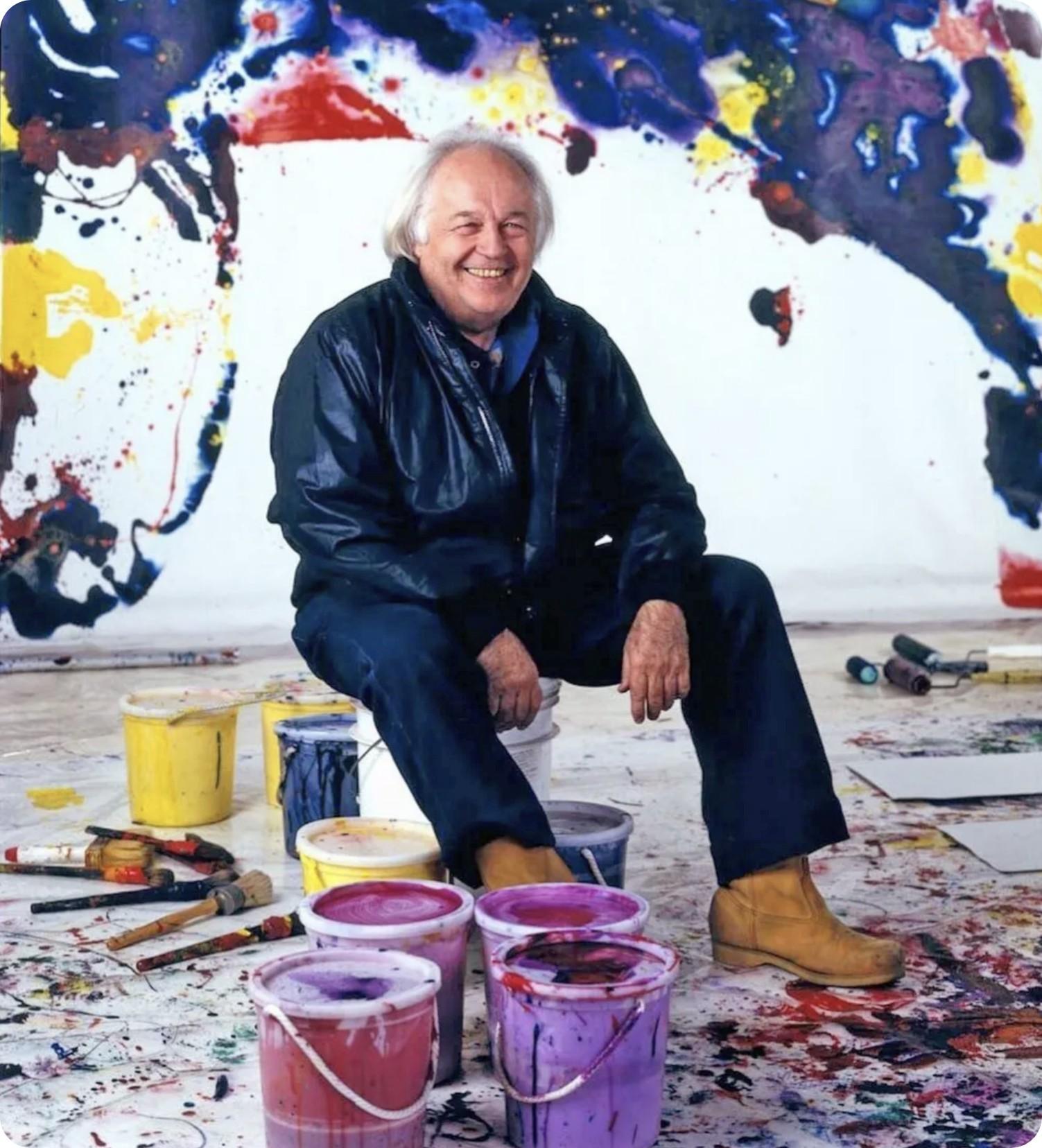
Sam FRANCIS (1923–1994, San Mateo, California, USA) was one of the leading figures of post-war American abstraction and among the most celebrated painters of the twentieth century. Renowned for his vibrant use of colour, expansive compositions and luminous white spaces, Francis developed a distinctive visual language that combined spontaneity, energy and extraordinary painterly freedom.
After serving as a pilot during the Second World War, Francis suffered severe spinal injuries that left him hospitalised for several years. During his recovery, he began painting, discovering a passion that would transform both his life and the course of post-war art. Following studies at the University of California, Berkeley, he settled in Paris in the early 1950s, where he quickly gained international recognition and became closely associated with the international movement of Abstract Expressionism.
Throughout a career spanning more than four decades, Francis worked in painting, printmaking and monumental commissions. Deeply influenced by Japanese aesthetics, Zen Buddhism and his extensive travels, he created luminous compositions in which intense colour interacts with expansive areas of white, producing works that radiate both movement and serenity. His paintings are celebrated for their remarkable balance between spontaneity and control, making them among the most recognisable achievements of post-war abstraction.
Today, Sam Francis is regarded as one of the foremost American painters of the twentieth century. His works are held in the world's leading museum collections and remain highly sought after by collectors for their exceptional colour, monumental presence and enduring influence on post-war abstract painting.