
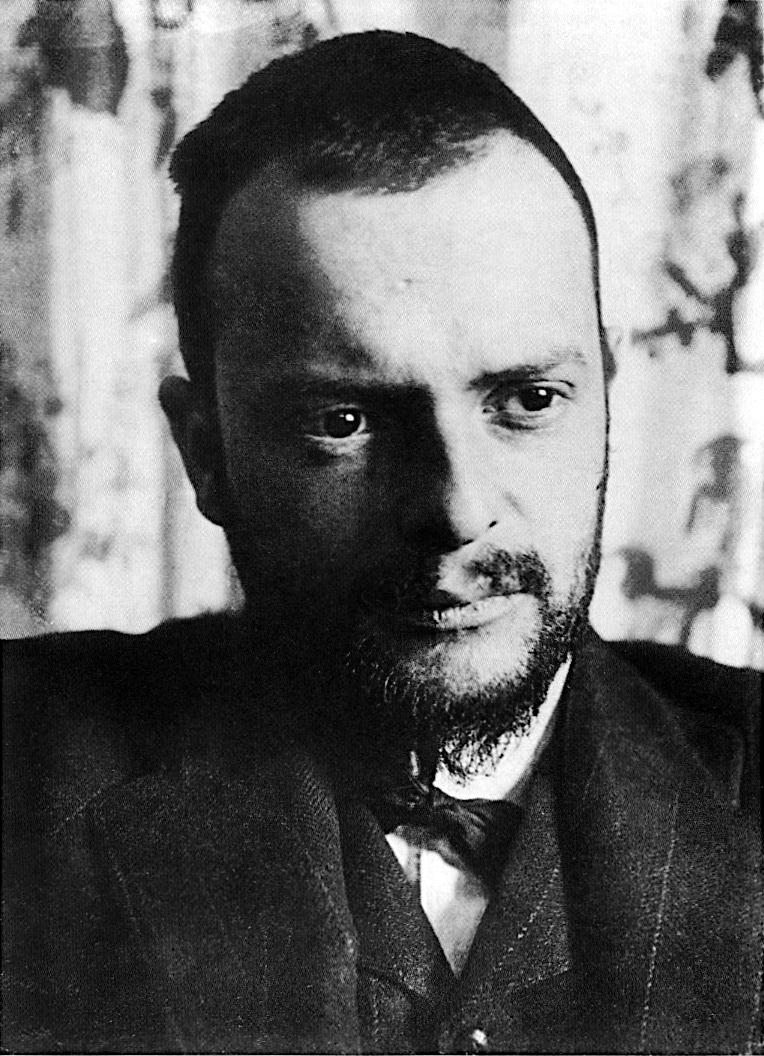
Paul Klee (1879–1940, Münchenbuchsee, Switzerland) developed one of the most distinctive and imaginative visual languages of twentieth-century modernism. Moving freely between abstraction and figuration, his paintings, drawings and watercolours combine delicate line, experimental colour, geometric structures and playful symbols, often creating mysterious worlds that seem to exist somewhere between music, poetry and dreams.
Raised in a musical family near Bern, Klee was an accomplished violinist before ultimately choosing visual art. He studied in Munich and became closely connected with Wassily Kandinsky, Franz Marc and the artists surrounding Der Blaue Reiter. A decisive moment came during his journey to Tunisia with August Macke and Louis Moilliet in 1914, when his experience of the intense North African light transformed his understanding of colour and pushed his work increasingly towards abstraction.
In 1920, Walter Gropius invited Klee to teach at the Bauhaus, where he remained for more than a decade and became one of the school's most influential masters alongside Kandinsky. His meticulous investigations of colour, movement, rhythm and natural forms informed both his teaching and his art. After the Nazis came to power, Klee was dismissed from his teaching position in Düsseldorf and his work was condemned as “degenerate”. He returned to Switzerland in 1933, where he spent the remainder of his life.
Despite serious illness during his final years, Klee remained extraordinarily productive, creating more than 1,200 works in 1939 alone. His combination of intellectual experimentation, humour, fantasy and poetic sensitivity has had an enduring influence on generations of artists. Today, the Zentrum Paul Klee in Bern houses the world's largest collection of his work, comprising around 4,000 paintings, watercolours and drawings.