

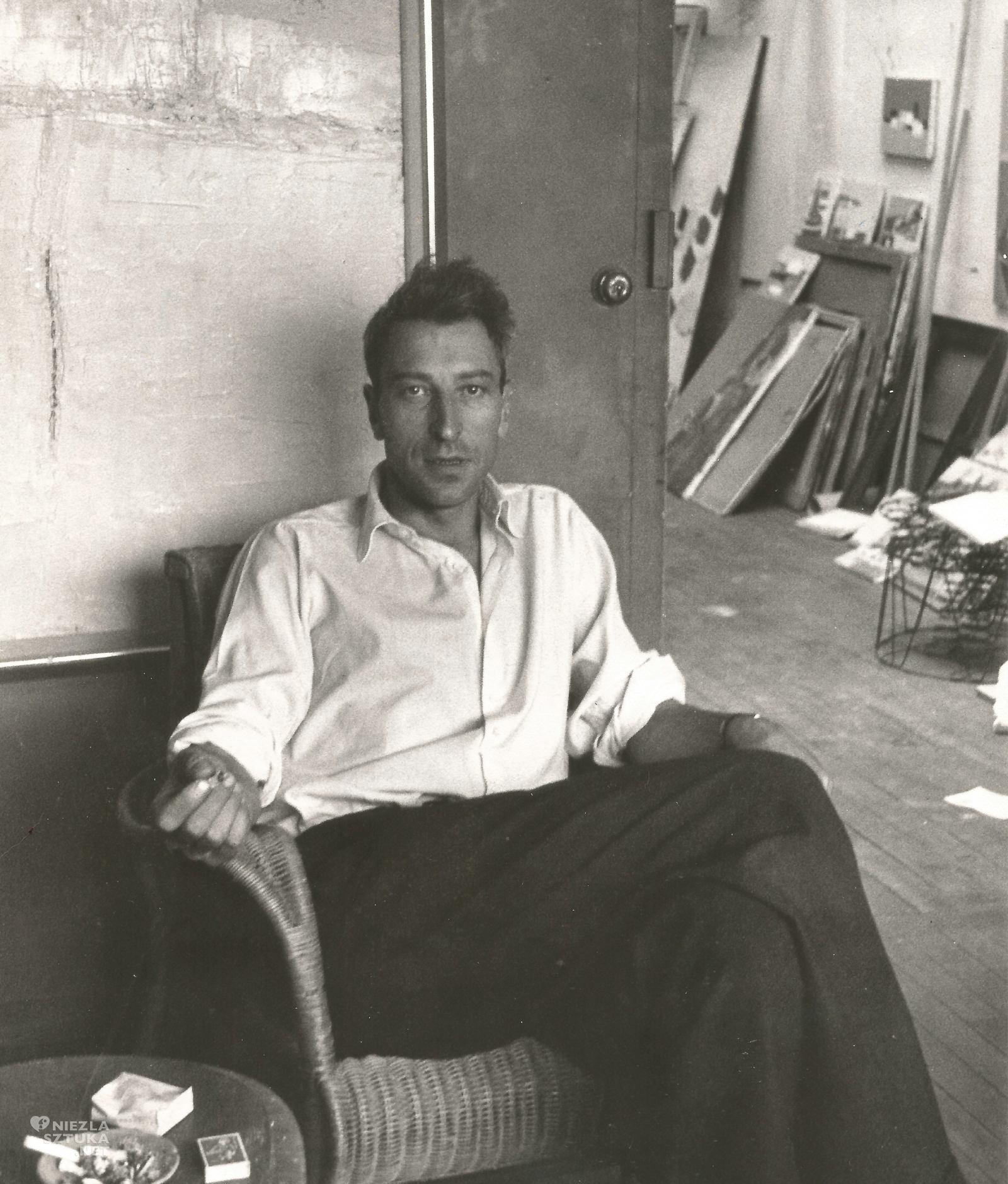
Nicolas DE STAEL (1914–1955, Saint Petersburg, Russia) was one of the most influential painters of the post-war period, renowned for his powerful synthesis of abstraction and representation. His richly textured compositions, built from bold blocks of colour and expressive palette-knife techniques, established him as one of the defining figures of post-war European painting.
Born into a Russian aristocratic family, De Staël fled the Russian Revolution and eventually settled in France after travelling extensively through Europe and North Africa. Following the Second World War, he developed a highly personal artistic language that balanced abstraction with recognisable landscapes, still lifes and figures. His paintings combine exceptional structural strength with an extraordinary sensitivity to colour, light and atmosphere.
During a remarkably intense career, De Staël produced some of the most celebrated works of post-war art. His later paintings became increasingly luminous and simplified, reflecting his fascination with the Mediterranean light of southern France. Despite growing international acclaim, he remained intensely self-critical and struggled with periods of emotional turmoil. In 1955, at the age of forty-one, he tragically took his own life, bringing an abrupt end to one of the most brilliant artistic careers of the twentieth century.
Today, Nicolas de Staël is regarded as one of the great masters of twentieth-century painting. His works are represented in the world's leading museum collections and remain highly sought after by collectors for their unique balance of abstraction, emotion and painterly brilliance. His remarkably short career, combined with the exceptional quality and rarity of his paintings, has only strengthened his enduring reputation among collectors, museums and institutions worldwide.