

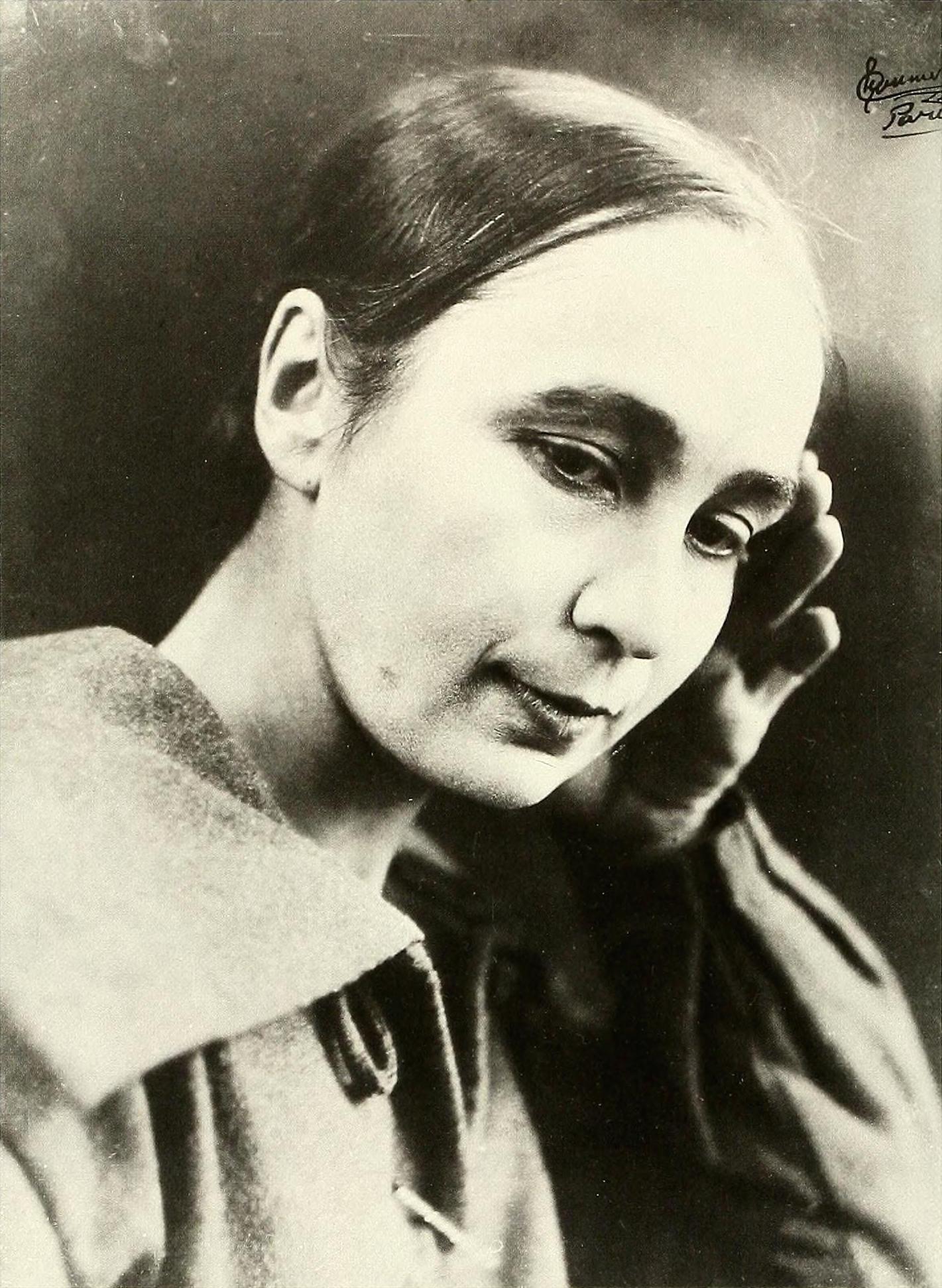
Natalia GONCHAROVA (1881–1962, Nagaevo, Russia) was one of the pioneers of the Russian avant-garde and among the most influential female artists of the twentieth century. Celebrated for her bold synthesis of Russian folk traditions, religious iconography and modern European movements, Goncharova played a decisive role in shaping the development of modern art before the First World War.
Born into an aristocratic family, Goncharova studied sculpture and painting at the Moscow School of Painting, Sculpture and Architecture, where she met her lifelong artistic partner Mikhail Larionov. Together they became leading figures of the Russian avant-garde, co-founding the movements of Neo-Primitivism and Rayonism. Her work drew inspiration from Byzantine icons, traditional Russian crafts and rural life, while embracing the expressive possibilities of Cubism and Futurism.
In 1915, Goncharova moved permanently to Paris, where she collaborated extensively with Sergei Diaghilev's Ballets Russes. Alongside her paintings, she achieved international acclaim for her innovative stage sets and costume designs, creating visually striking productions that transformed theatrical design and influenced generations of artists and designers.
Today, Natalia Goncharova is recognised as one of the greatest innovators of modern art. Her works are represented in the world's leading museum collections and continue to command exceptional prices at auction, reflecting her pioneering contribution to the Russian avant-garde and her enduring influence on twentieth-century art.