

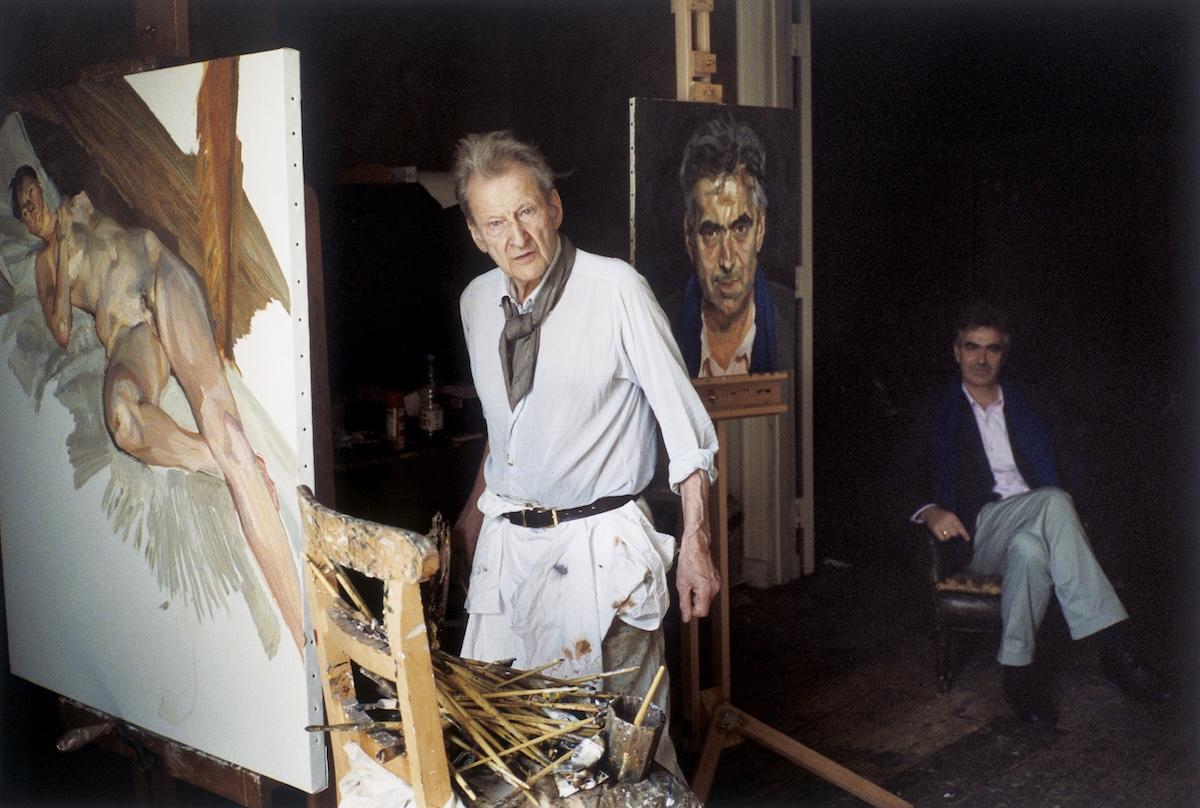
Lucian FREUD (1922–2011, Berlin, Germany) was one of the most important figurative painters of the twentieth century, celebrated for his uncompromising portraits and nudes that redefined realism in post-war art. Through an intensely observational approach and extraordinary technical mastery, Freud created works of remarkable psychological depth and physical presence.
Born in Berlin, Freud emigrated with his family to Britain in 1933 after the rise of the Nazi regime. The grandson of psychoanalyst Sigmund Freud, he studied at the East Anglian School of Painting and Drawing before emerging as one of the leading figures of the School of London alongside Francis Bacon, Frank Auerbach and Leon Kossoff.
From the 1950s onwards, Freud developed the distinctive painterly style for which he became internationally renowned. Working directly from life, often over months of prolonged sittings, he built his paintings with thick, expressive brushstrokes that reveal every nuance of flesh, light and texture. His uncompromising honesty and refusal to idealise his subjects resulted in portraits of extraordinary intimacy and emotional power.
Today, Lucian Freud is recognised as one of the greatest figurative painters of the modern era. His works are held in the world's leading museum collections and continue to command record prices at auction, reflecting their rarity, exceptional quality and enduring influence on contemporary figurative painting.