

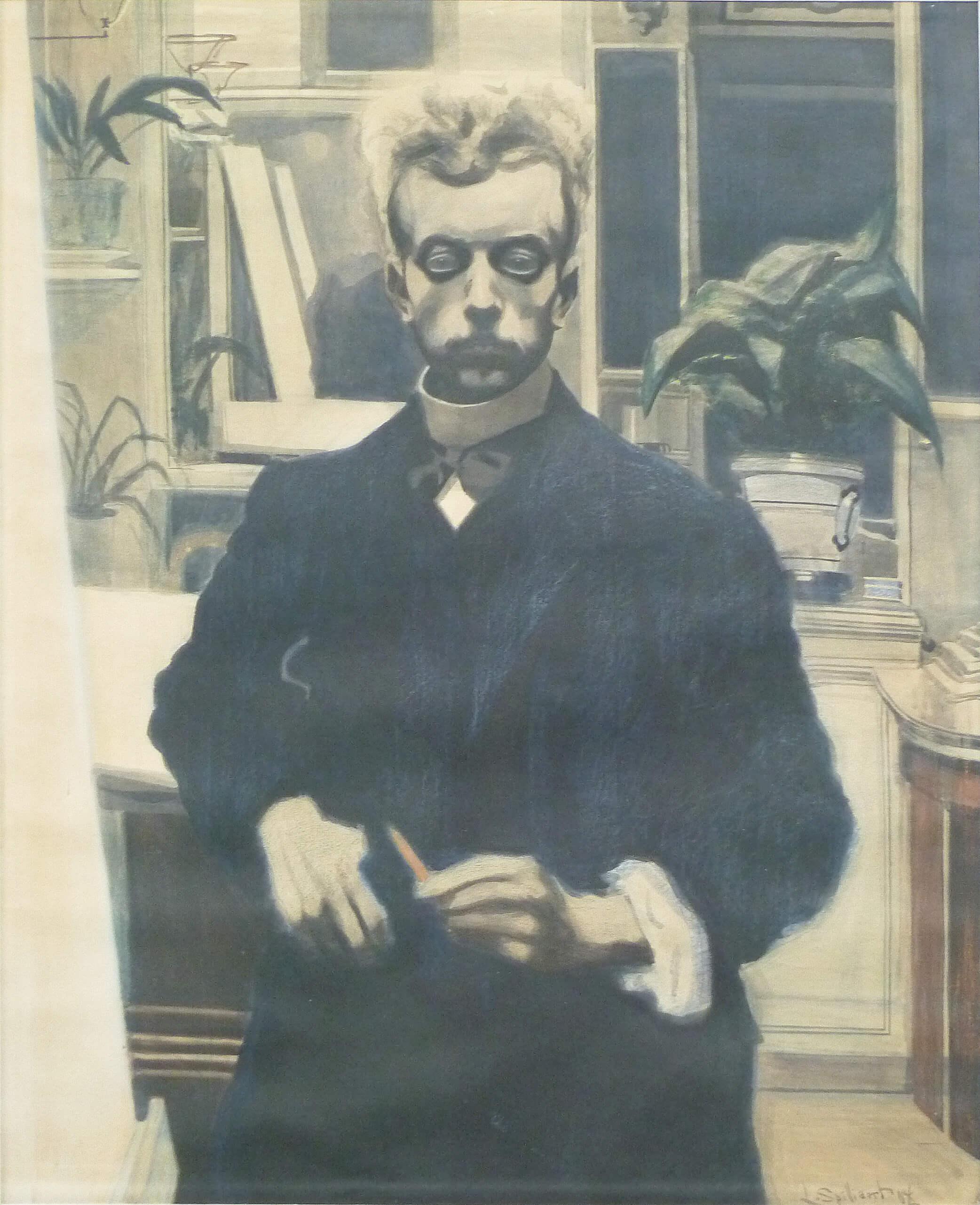
Léon Spilliaert (1881–1946, Ostend, Belgium) was one of the most distinctive Belgian artists of the early twentieth century, known for haunting self-portraits, nocturnal seascapes and psychologically charged interiors. Working primarily on paper with ink, wash, watercolour, pastel and coloured pencil, he created a deeply personal visual language marked by solitude, introspection and an extraordinary sensitivity to light and darkness.
Largely self-taught, Spilliaert grew up in Ostend and remained closely connected to the North Sea throughout his life. Periods of ill health and insomnia contributed to long nocturnal walks through the deserted streets and promenades of the city, experiences that strongly shaped the atmosphere of his early work. Empty spaces, receding perspectives and isolated figures became recurring elements in compositions that often seem suspended between reality and dream.
His celebrated self-portraits from the first decade of the twentieth century are among the most psychologically intense images in Belgian modern art. Distorted perspectives, deep shadows and stark contrasts transform the artist’s own face into an almost spectral presence. Although associated with Symbolism, Spilliaert remained highly individual, drawing selectively on influences from artists such as Edvard Munch while developing an unmistakable style of his own.
Later in life, his work became lighter in tone and increasingly engaged with landscapes, trees and family life, yet the sense of silence and contemplation that defined his early work never entirely disappeared. Most of his oeuvre remained centred on works on paper, a medium he used with exceptional subtlety and invention.
Today, Léon Spilliaert is recognized as one of the most important Belgian artists of his generation. His mysterious, introspective imagery and highly personal exploration of solitude, space and perception have earned him an increasingly prominent place within European modernism.