
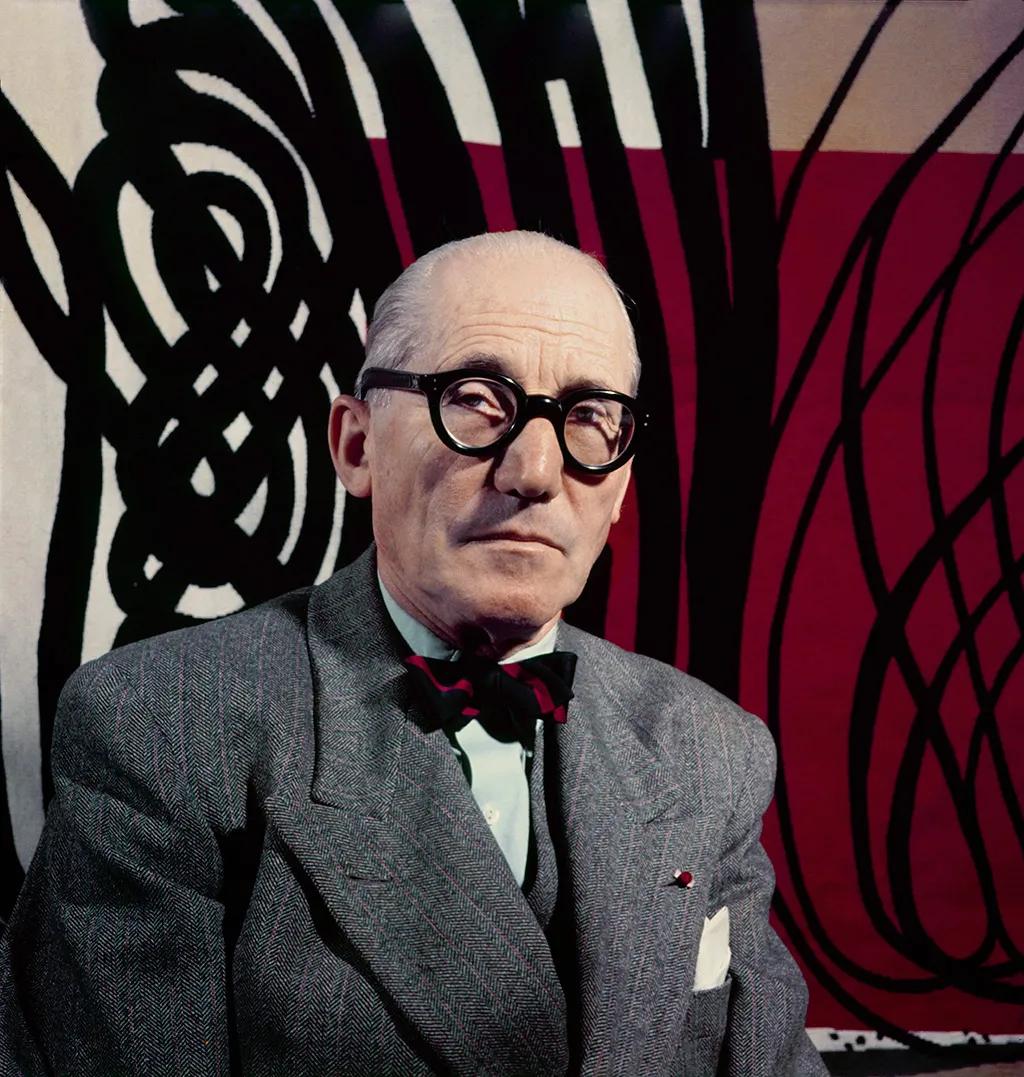
Le Corbusier (1887–1965, La Chaux-de-Fonds, Switzerland), born Charles-Édouard Jeanneret-Gris, was a pioneering architect, designer and visual artist whose radical ideas helped shape twentieth-century modernism. Although internationally celebrated above all for his architecture, painting remained a fundamental part of his creative practice throughout his life and strongly influenced his approach to form, space and colour.
After training in his native Switzerland, Jeanneret travelled extensively through Europe before settling in Paris. There he met the French painter Amédée Ozenfant, with whom he developed Purism, an artistic movement that sought to move beyond Cubism through simplified geometric forms, carefully structured compositions and representations of everyday objects. Together they published the influential manifesto Après le cubisme in 1918. Around this period, Jeanneret adopted the name Le Corbusier.
Painting provided a laboratory for ideas that would recur throughout his architecture and design. His early Purist still lifes gradually gave way to more organic and increasingly expressive compositions populated by human figures, hands, shells and abstract forms. He also worked extensively in drawing, printmaking, tapestry, sculpture and mural painting, regarding these disciplines not as separate activities but as interconnected aspects of a single creative vision.
Alongside his visual art, Le Corbusier revolutionized modern architecture through buildings including Villa Savoye near Paris, the Unité d'Habitation in Marseille, the chapel of Notre-Dame-du-Haut at Ronchamp and his extensive work in Chandigarh, India. His architectural theories concerning light, proportion, functionality and modern urban life exerted an extraordinary international influence.
Today, Le Corbusier is recognized not only as one of the defining architects of modernism but also as a significant multidisciplinary artist. His paintings and works on paper reveal a more intimate and experimental dimension of his practice, while demonstrating the continuous dialogue between art, architecture and design that underpinned his entire career.