
Jean-Paul Riopelle (1923–2002, Montreal, Canada) was a major figure of post-war abstraction, celebrated for densely layered paintings in which colour, texture and gesture combine into vibrant, mosaic-like surfaces. Closely associated with the European movement of Lyrical Abstraction and the École de Paris, Riopelle developed an intensely physical approach to painting that established him as one of Canada's most internationally significant modern artists.
Riopelle studied at the École du meuble in Montreal under Paul-Émile Borduas and became associated with Les Automatistes, the radical group of Quebec artists who rejected academic convention in favour of spontaneity and creative freedom. In 1948, he was one of the signatories of the influential Refus global manifesto, which challenged the conservative cultural and social establishment of Quebec.
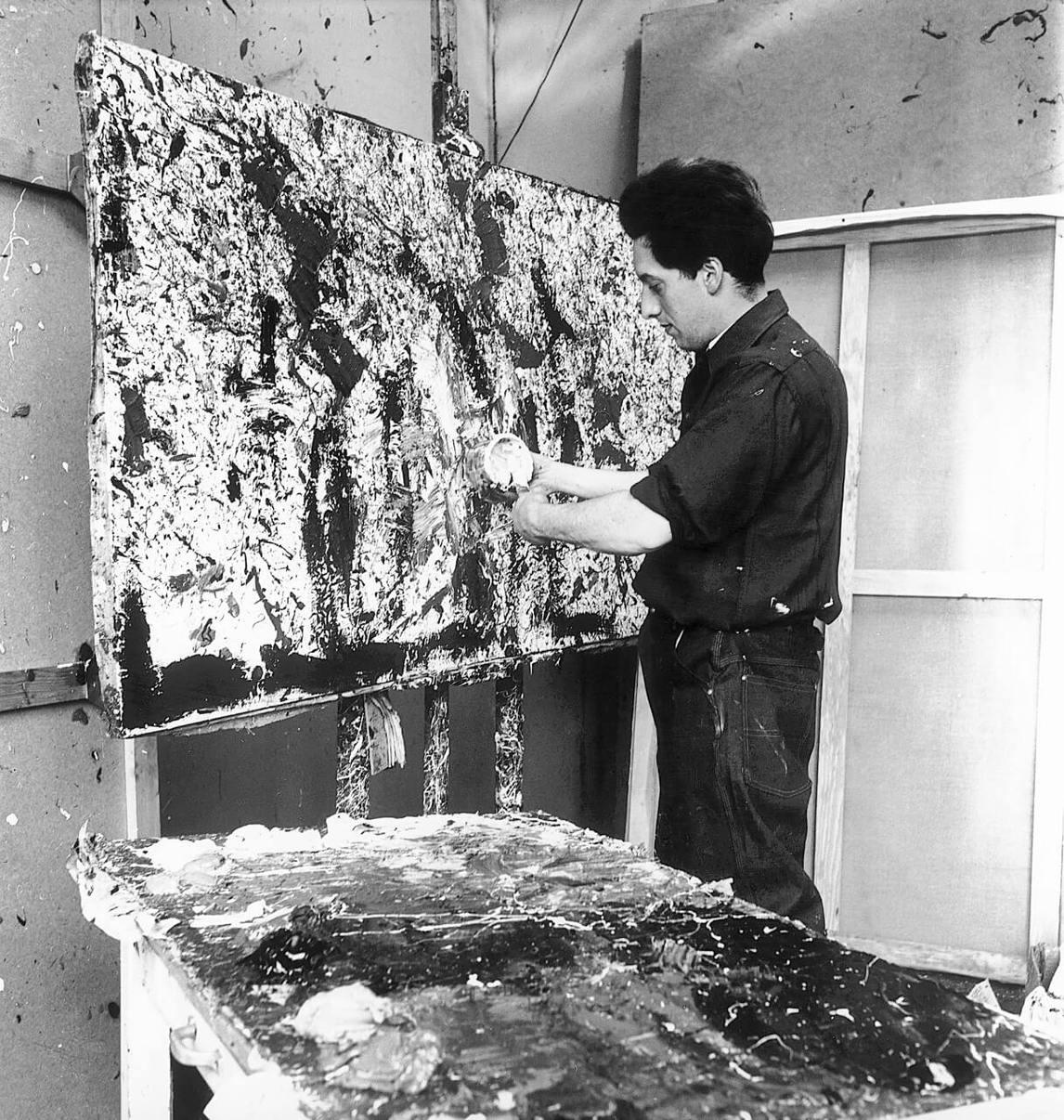
After moving permanently to Paris in the late 1940s, Riopelle became immersed in the European avant-garde and associated with artists and writers connected to Surrealism. During the 1950s he developed his celebrated mosaic paintings, applying thick quantities of paint with a palette knife in short, forceful strokes. Interlocking fragments of colour spread across the entire canvas, creating complex surfaces that appear simultaneously spontaneous and carefully balanced.
Riopelle's practice extended well beyond these iconic abstractions. He worked extensively in sculpture, printmaking, collage and ceramics, while landscapes, animals and references to the natural world became increasingly visible in his later work. His long and turbulent relationship with American painter Joan Mitchell, which lasted for almost twenty-five years, placed two of the most important post-war abstract painters in an intense artistic and personal dialogue.
One of Riopelle's most ambitious late achievements was L'Hommage à Rosa Luxemburg (1992), an extraordinary sequence extending approximately forty metres and created following Mitchell's death. Incorporating recurring silhouettes of birds and other personal symbols, the work forms a monumental meditation on memory, loss and their shared history.
Today, Jean-Paul Riopelle is recognized as a central figure in post-war international abstraction. His synthesis of European avant-garde ideas, extraordinary material energy and a lifelong engagement with the landscapes and wildlife of Canada created a body of work that remains unmistakably his own.