
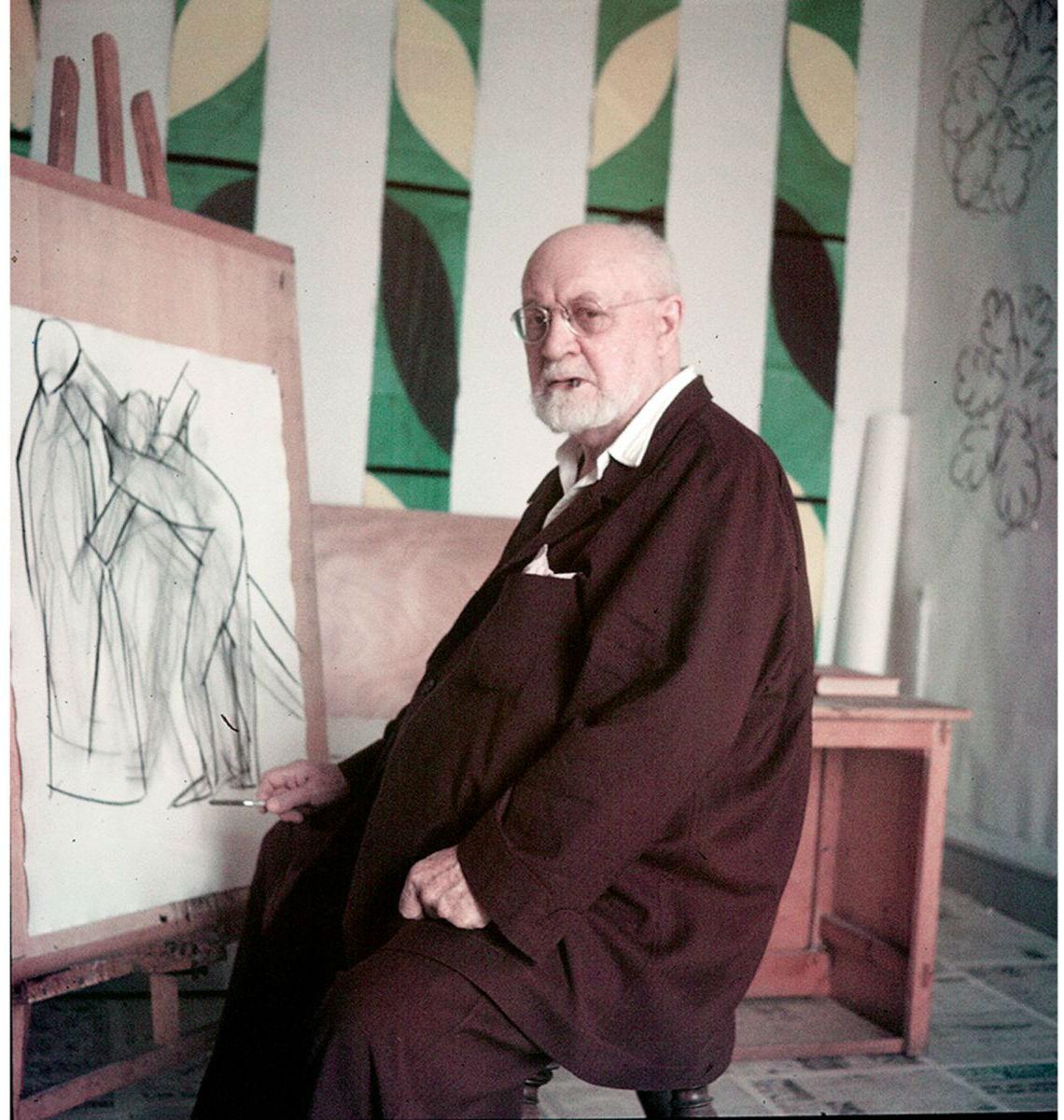
Henri Matisse (1869–1954, Le Cateau-Cambrésis, France) transformed modern art through an extraordinary command of colour, line and decorative form. Initially a leader of Fauvism, he spent more than half a century continually simplifying and reinventing his visual language, creating paintings, drawings, sculptures and cut-outs characterized by an exceptional sense of balance, rhythm and colour.
Matisse initially studied law and only discovered painting while recovering from illness in his early twenties. He subsequently trained in Paris, where encounters with Impressionism, Post-Impressionism and the work of artists such as Cézanne and Van Gogh encouraged increasingly adventurous experiments with colour. In 1905, his intensely coloured paintings exhibited alongside works by André Derain and Maurice de Vlaminck prompted a critic to describe the artists as les fauves—“the wild beasts”—giving Fauvism its name.
Although his Fauvist period was relatively brief, colour remained fundamental throughout Matisse's career. Works such as The Dance, The Red Studio and his many interiors and odalisques demonstrate his progressive reduction of perspective and modelling in favour of flattened space, expressive contours and large areas of pure colour. His extensive travels, particularly to North Africa, further enriched his fascination with pattern, textiles, light and ornament.
During the final decade of his life, declining health made conventional painting increasingly difficult. Rather than limiting his practice, Matisse developed his celebrated papiers découpés, cutting shapes directly from sheets painted with gouache and arranging them into vibrant compositions. Works such as The Snail and the images collected in Jazz transformed simple pieces of coloured paper into a radically new synthesis of drawing and colour.
Today, Henri Matisse is regarded as one of the defining artists of twentieth-century modernism. His lifelong pursuit of expressive simplicity profoundly influenced generations of painters and helped establish colour itself as an independent force within modern art.