
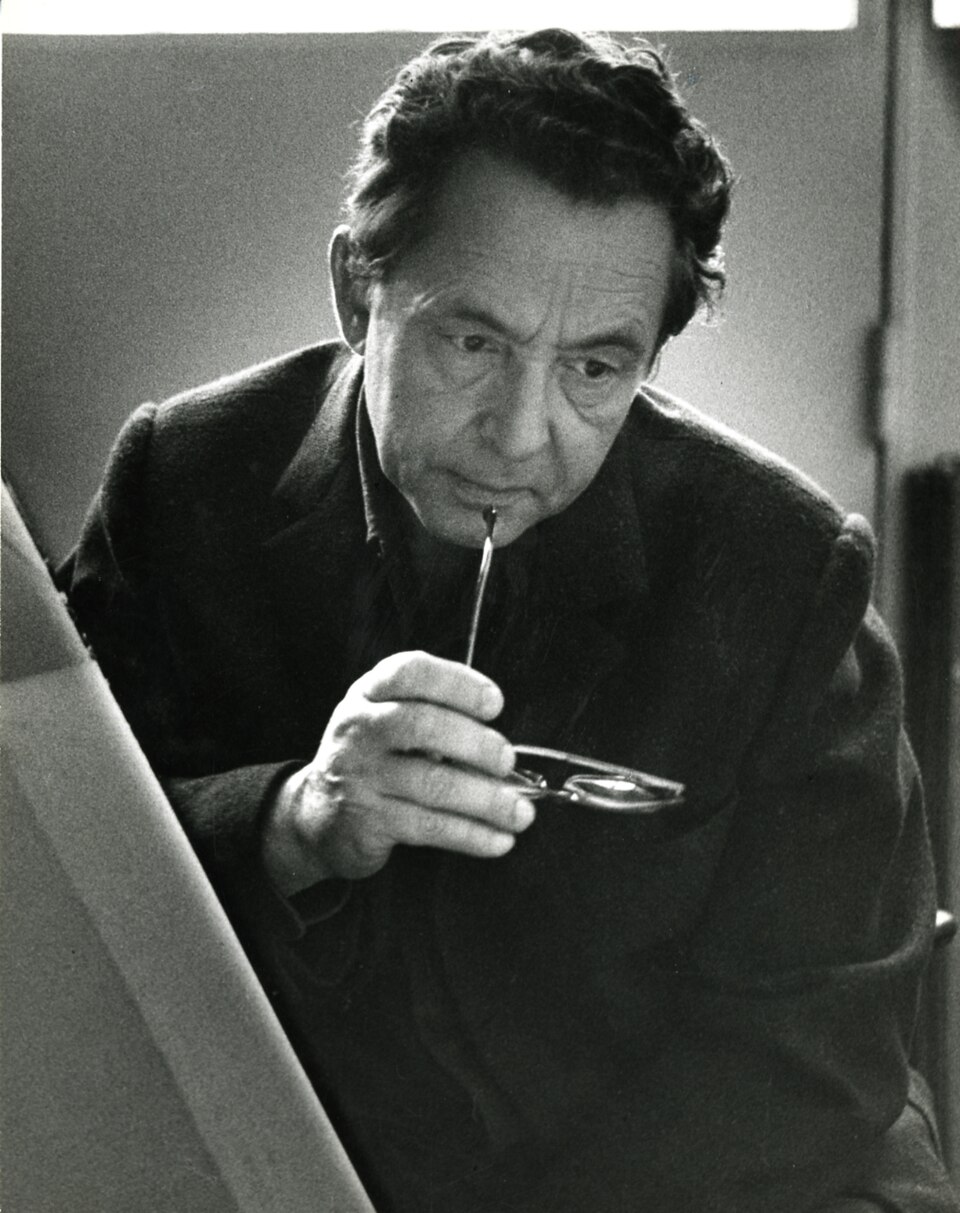
Hans HARTUNG (1904–1989, Leipzig, Germany) was a pioneering force in post-war European abstraction, celebrated for his dynamic gestural paintings and his decisive contribution to Art Informel and Lyrical Abstraction. His energetic brushwork and innovative techniques established him as one of the defining artists of post-war modern art.
Born in Leipzig, Hartung developed a passion for painting at an early age before studying at the academies of Leipzig, Dresden and Munich. Opposed to the rise of Nazism, he left Germany in the 1930s and eventually settled in France, where he would spend most of his life. During the Second World War, he joined the French Foreign Legion and was seriously wounded in combat, resulting in the amputation of one of his legs. Despite this life-changing injury, he continued to paint with extraordinary determination and became a French citizen in 1945.
Throughout his career, Hartung constantly pushed the boundaries of abstraction. His sweeping black lines, scratched surfaces and explosive compositions convey both spontaneity and remarkable control. In the 1960s and 1970s, he further expanded his artistic vocabulary by experimenting with industrial tools such as spray guns, rakes and branches, creating some of the most powerful and innovative works of his career.
Today, Hans Hartung is regarded as one of the great masters of post-war European painting. His works are represented in the world's leading museum collections and continue to command strong international demand, reflecting their historical importance, technical innovation and enduring influence on abstract art.