

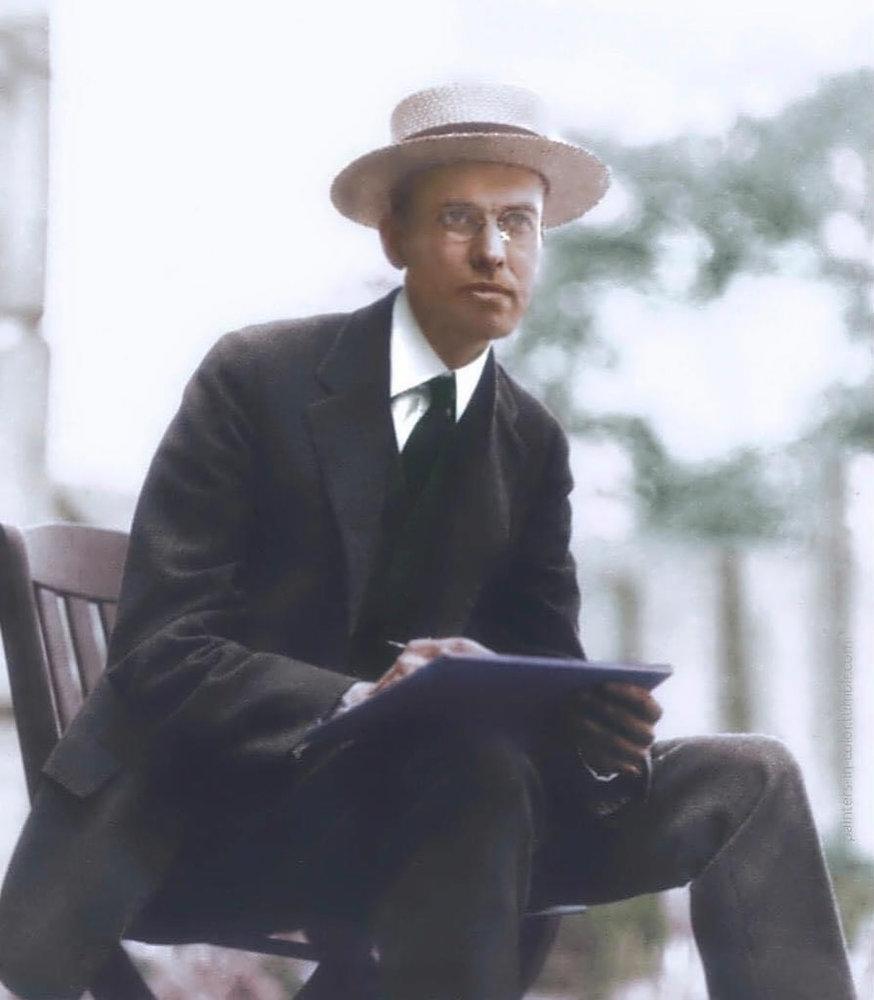
Edward HOPPER (1882–1967, Nyack, New York, USA) transformed ordinary scenes of American life into timeless meditations on solitude, light and the human condition. Through his masterful use of composition and atmosphere, Hopper became one of the most recognisable and enduring figures in twentieth-century American art.
After studying at the New York School of Art under Robert Henri, Hopper travelled extensively through Europe, drawing inspiration from French painting while ultimately developing a distinctly American visual language. Although he worked successfully as a commercial illustrator for many years, his true artistic breakthrough came during the 1920s, when his evocative depictions of urban streets, theatres, hotels, diners and coastal landscapes began attracting widespread recognition.
Throughout his career, Hopper explored themes of isolation, contemplation and the quiet poetry of everyday life. His carefully orchestrated compositions, dramatic interplay of light and shadow, and restrained palette created scenes that feel both deeply personal and universally familiar. Masterpieces such as Nighthawks (1942) have become enduring icons of American culture and have profoundly influenced generations of painters, photographers and filmmakers.
Today, Edward Hopper is regarded as one of the defining masters of American modernism. His works are represented in the world's leading museum collections and continue to captivate collectors and audiences alike through their timeless atmosphere, emotional depth and extraordinary ability to transform the ordinary into the unforgettable.