
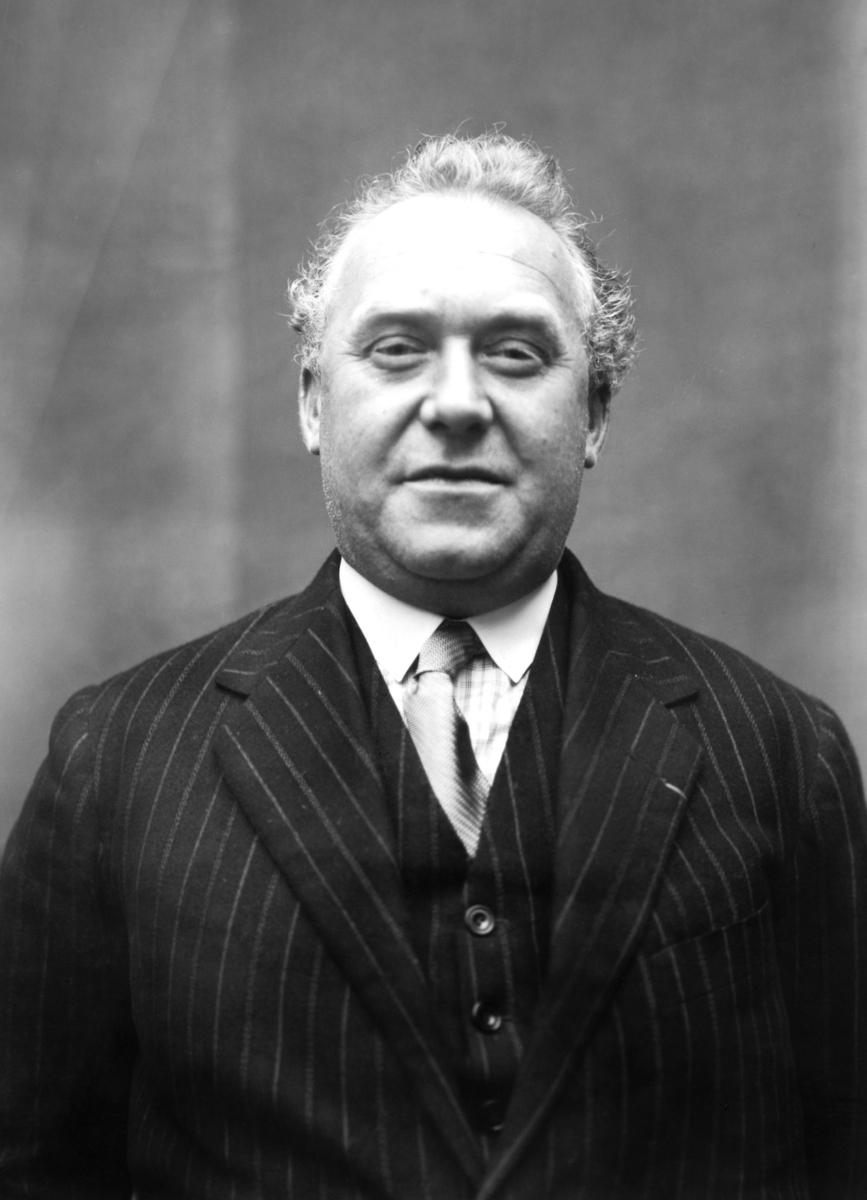
Constant Permeke (1886–1952, Antwerp, Belgium) was a defining figure of Belgian Expressionism, renowned for powerful depictions of fishermen, farmers, rural landscapes and monumental human figures. Through dark earth tones, heavy forms and strongly simplified compositions, Permeke developed an unmistakable visual language rooted in the physical hardship and elemental character of everyday life.
Raised in Ostend, where his father served as curator of the local museum, Permeke studied at the academies of Bruges and Ghent. He became closely associated with the artists of the Sint-Martens-Latem circle, whose search for a more direct and spiritual connection with rural life strongly influenced his development. During the First World War, after being wounded during the defence of Antwerp, he spent several years in England before returning to Belgium.
The North Sea and the fishing communities around Ostend became central subjects in Permeke's work. His fishermen and their families are often represented as massive, almost sculptural presences, shaped by labour and their environment. After settling in Jabbeke in the late 1920s, agricultural workers, fields and farm landscapes increasingly entered his imagery, while his palette gradually became warmer and more varied.
Alongside painting and drawing, Permeke also turned increasingly to sculpture during the later part of his career. His robust figures in bronze and other materials translated the same sense of physical weight and monumentality found in his paintings into three dimensions.
Today, Constant Permeke is regarded as one of the most important Belgian artists of the twentieth century and a central representative of Flemish Expressionism. His former home and studio in Jabbeke became the Permekemuseum, while his uncompromising depictions of human resilience and the Flemish landscape remain among the most recognizable achievements of Belgian modern art.