

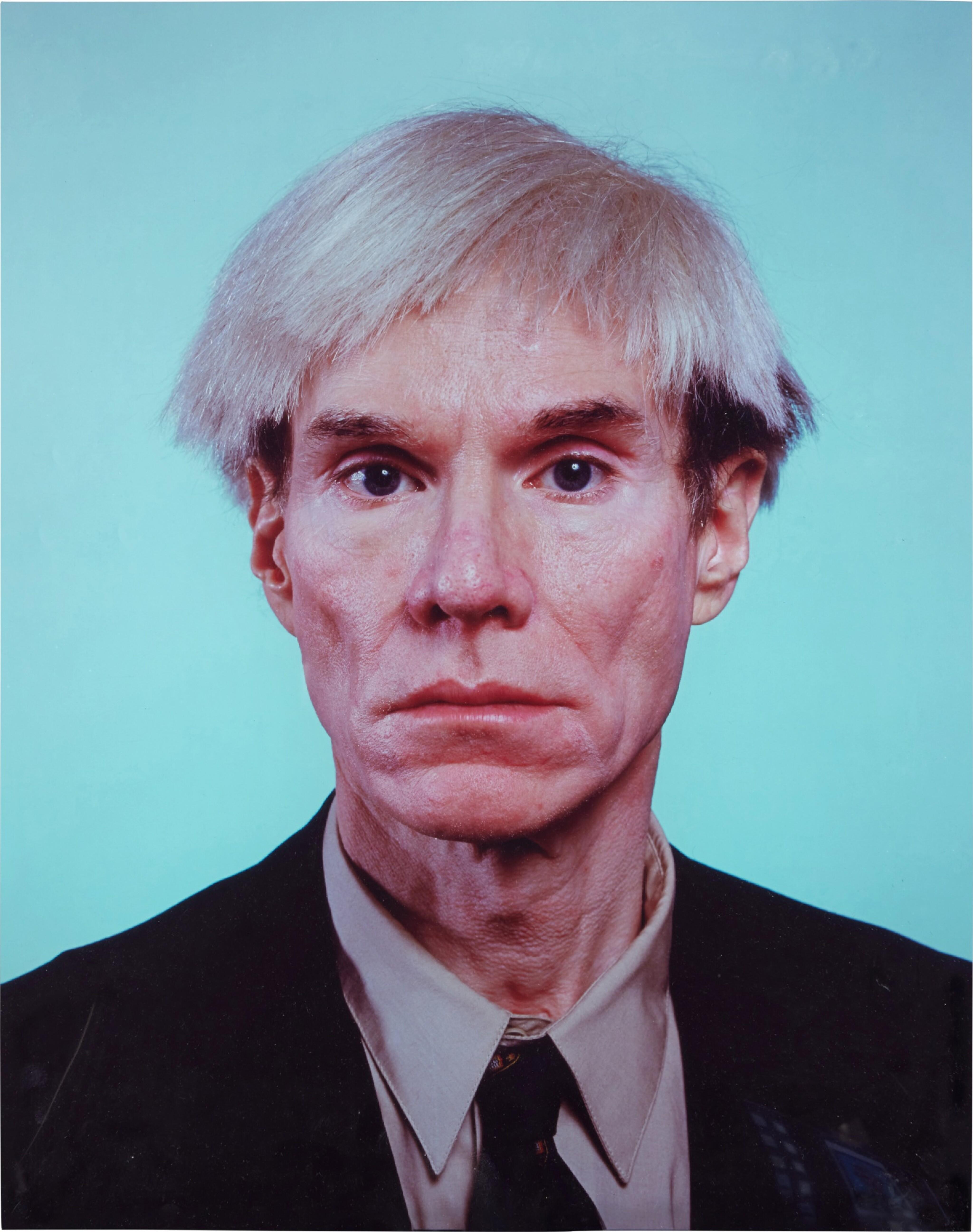
Andy Warhol (1928–1987, Pittsburgh, Pennsylvania, USA) changed the way the world looks at art — and at fame itself.
At first glance, his work seems bold, colourful and instantly accessible: Marilyn Monroe, Campbell’s Soup Cans, Flowers and Coca-Cola bottles. But behind those iconic images stood a far more complex figure: shy, deeply observant, physically vulnerable and profoundly fascinated by beauty, celebrity and death.
Born Andrew Warhola to immigrant parents of Slovak heritage, Warhol grew up in Pittsburgh before moving to New York in 1949. He quickly became a successful commercial illustrator, but his ambitions reached far beyond advertising. In the early 1960s, he began transforming familiar images from newspapers, Hollywood and consumer culture into fine art, challenging the boundaries between art and everyday life.
His breakthrough came in 1962 with Campbell’s Soup Cans and his celebrated portraits of Marilyn Monroe. Through screenprinting, Warhol repeated images while changing their colours and intensity, turning ordinary photographs into unforgettable icons.
But his art was never only about glamour.
Alongside his colourful portraits and playful Flowers, Warhol explored some of life's darkest themes. His Death and Disaster series confronted viewers with car crashes, electric chairs and the unsettling relationship between mass media and human suffering.
In 1968, his life changed forever. Valerie Solanas shot Warhol, leaving him critically wounded. He survived after emergency surgery, but the attack left permanent physical scars and profoundly affected his sense of security. Behind his carefully cultivated public image stood a man who had come terrifyingly close to death.
Yet Warhol continued creating. His legendary Factory brought together artists, musicians, actors and outsiders, while his own artistic world expanded into film, photography, publishing and music. During the 1970s and 1980s, he produced some of his most memorable portraits and print portfolios.
In 1987, at just 58 years old, Warhol died from complications following gallbladder surgery. His extraordinary career had ended unexpectedly, but his influence on art and popular culture would prove enduring.
In Warhol’s world, glamour and mortality were never far apart. His brightest images can be seen as celebrations of beauty — but also as reminders of how fleeting it can be.